As parents, we often think about milestones in simple terms.
When will my baby crawl? When will they walk? When will they talk?
But developmental milestones are about so much more than checking boxes on a pediatrician’s chart. They are observable signs of neurological and developmental organization that help build the foundation for future movement, learning, communication, emotional regulation, and independence.
Development Builds on Development 🧠
During the first two years of life, your child’s brain and nervous system are developing at an incredible pace.
Skills are not isolated. They build on one another.
Your baby first develops head control. Then they learn to roll, sit, crawl, pull to stand, and eventually walk.
The same thing happens with communication. Eye contact develops into tracking, then cooing and babbling, gestures, and eventually words and more complex communication.
The order matters because each skill helps prepare the nervous system for the next.
This is why we don’t want to look at a milestone as simply, “Did they do it?”
We also want to ask:
How did they do it? When did they do it? And what came before it?
Movement Is Brain Development 🚼🧠
Movement isn’t just physical exercise.
For a developing child, movement provides information to the brain about balance, gravity, coordination, spatial awareness, and where the body is in space.
Rolling both directions, crawling with a cross crawl pattern, pulling to stand, tracking with the eyes, and exploring the environment all provide valuable neurological input.
As children grow, those early skills become the foundation for increasingly complex tasks like reading, writing, playing sports, problem solving, and navigating social situations.
This is why movement matters at every age, not just during infancy.
What Happens When a Milestone Is Skipped?
Sometimes parents hear:
“She’s just a late walker.”
“He skipped crawling. He’ll be fine.”
“He’ll talk when he’s ready.”
“She’s just clumsy.”
And sometimes children do develop differently.
But if your mom gut is telling you something isn’t quite right, it’s worth taking a closer look.
A missed, skipped, or delayed milestone can give us information about how a child’s nervous system is responding to their environment.
As children get older, the demands on their nervous system increase. School requires them to sit, follow multi step directions, read, write, regulate emotions, solve problems, coordinate movement, and navigate social situations.
Sometimes a developmental challenge doesn’t become obvious until the environment begins asking more from them.
Read more about Pediatric chiropractic
Become a Student of Your Child 👀
One of the best things you can do is simply watch your child.
Pay attention to:
👣 How they move from one position to another
🧠 How they learn new skills
💬 How they communicate
❤️ How they respond to sensory input
😴 How they sleep and regulate
🧸 How they play and explore
🤸 How coordinated or clumsy their movements seem
You don’t have to become an expert in child development.
You just need to know your child.
And if something feels off, you don’t have to ignore that feeling simply because you’re being told to wait and see.
Looking Beyond the Symptom 🔎
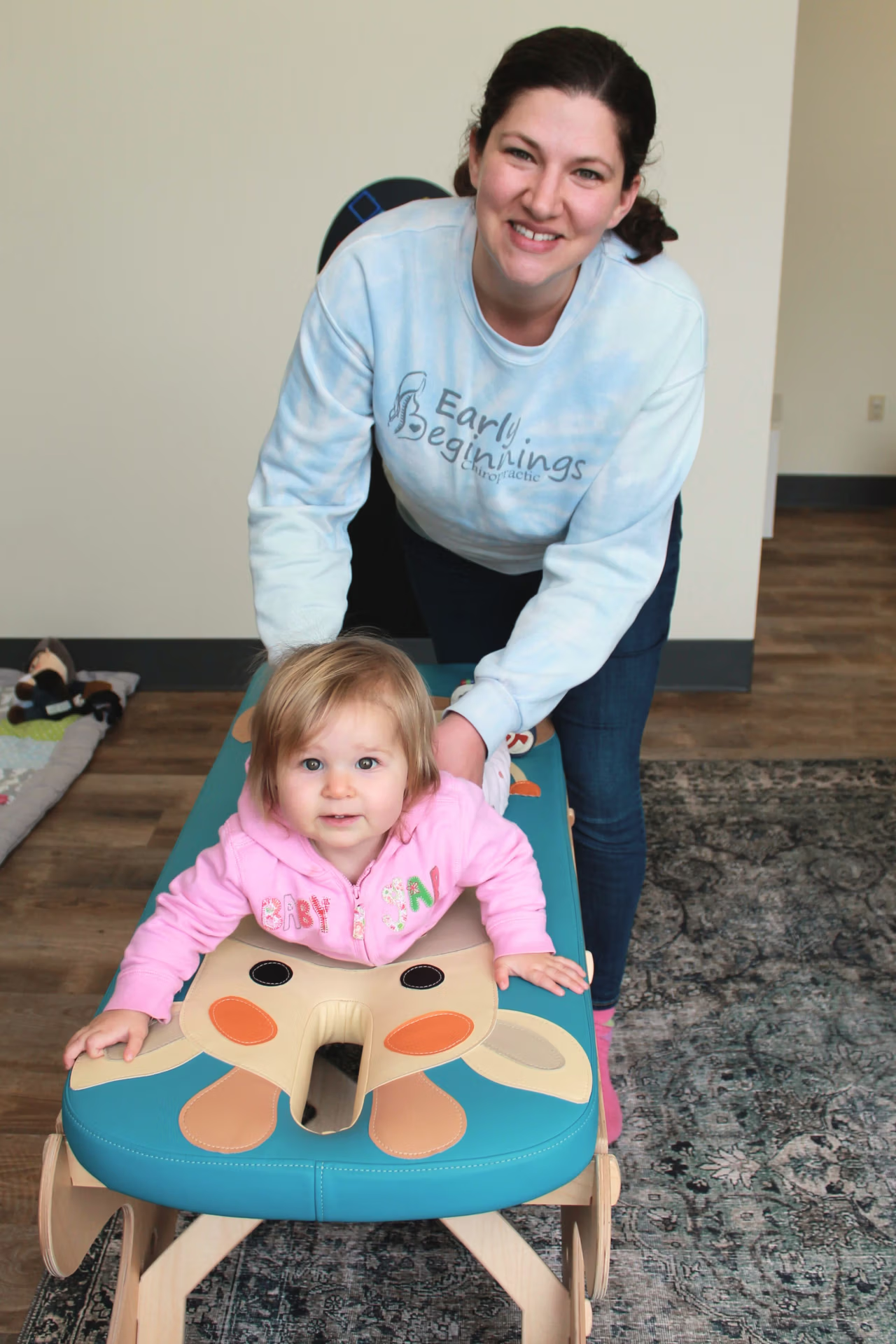
At Early Beginnings Chiropractic, Dr. Camille looks beyond the symptom and asks what your child’s nervous system may be telling us.
For infants and toddlers who can’t tell us what they’re experiencing, we can learn a tremendous amount from their movement patterns, posture, primitive reflexes, balance, sensory responses, and developmental milestones.
Early Beginnings also uses INSiGHT scanning to provide objective information about how the nervous system is responding to stress and how the brain is communicating with the body.
This information can help create a customized plan based on your child, rather than simply guessing or waiting.
Learn more about INSiGHT Scans
You Don’t Have to Wait and See Forever 💛
If you’re wondering whether your child is developing appropriately, you don’t have to panic.
You also don’t have to ignore your concerns.
Whether you simply want a wellness check or you’re noticing delayed, skipped, or unusual milestones, getting more information can help you make informed decisions about your child’s care.
The earlier we understand what’s happening, the more opportunities we have to provide appropriate support.
And sometimes, that clarity alone can bring a huge sense of relief.
Your Child Is Constantly Learning 🌱
Every movement, interaction, and experience gives your child’s nervous system information.
Development builds on development.
And every new skill creates a foundation for what’s coming next.
So keep watching. Keep encouraging movement. Keep learning about your child.
And most importantly, trust your mom gut.
If something is telling you that your child needs a closer look, we’re here to help you understand what you’re seeing.
✨ One decision can change the trajectory.